


Exclusive, sole or authorised distributor
What each distribution model means, how they differ and how to choose the one that suits your company.
An exclusive distributor is the only company that sells the brand in a territory, and the brand agrees not to sell there itself. A sole distributor is also the only one appointed, but the brand keeps the right to sell directly. An authorised distributor is approved by the brand, usually alongside others.
The only seller in the territory
No other distributor, and the brand does not sell directly in that market.
The only distributor appointed
No other distributor, but the brand may still sell directly.
Officially approved by the brand
Products come through the official channel, usually without exclusivity.
The three models compared
| Model | Other distributors | Brand sells directly | Typical use |
|---|---|---|---|
| Exclusive | No | No | The distributor invests in launching the brand |
| Sole | No | Yes | The brand keeps some key accounts or online sales |
| Authorised | Usually yes | Depends on the agreement | Large markets or several channels |
These are the meanings most commonly used in international trade. In each case, what applies is what the distribution agreement says. If what you need is the brand’s approval without exclusivity, see our guide to the authorized distributor.
Exclusive distributor meaning
An exclusive distributor receives the right to be the only seller of the brand in a defined territory, and the brand undertakes not to appoint anyone else or sell there itself.
In return, brands usually expect a plan to launch and develop the brand, coverage of the agreed channels and regular reporting on the market. Exclusivity is normally limited in time and linked to objectives agreed by both parties.
Our guide explains how territorial exclusivity works in practice.
Sole distributor meaning, and what an authorised distributor is
A sole distributor is the only distributor in the territory, but the brand reserves the right to sell there directly, for example to certain customers or online. The distributor does not compete with other distributors, but may compete with the brand itself.
An authorised distributor has been officially approved to sell the brand, without territorial exclusivity. In large markets a brand may authorise several, for example one for pharmacies and another for retail chains.
How to choose the model that suits you
- Define your territory and channels. A whole country, a region, or specific channels such as pharmacy or retail.
- Assess your investment. Sales team, marketing and stock to launch the brand.
- Think about the time frame. Exclusivity is usually reviewed after an agreed period.
- Prepare your proposal. Your market, your customers and your plan for the brand.
- Review the agreement. What a distribution agreement covers, checked with a legal adviser.
Distributing Pierrot
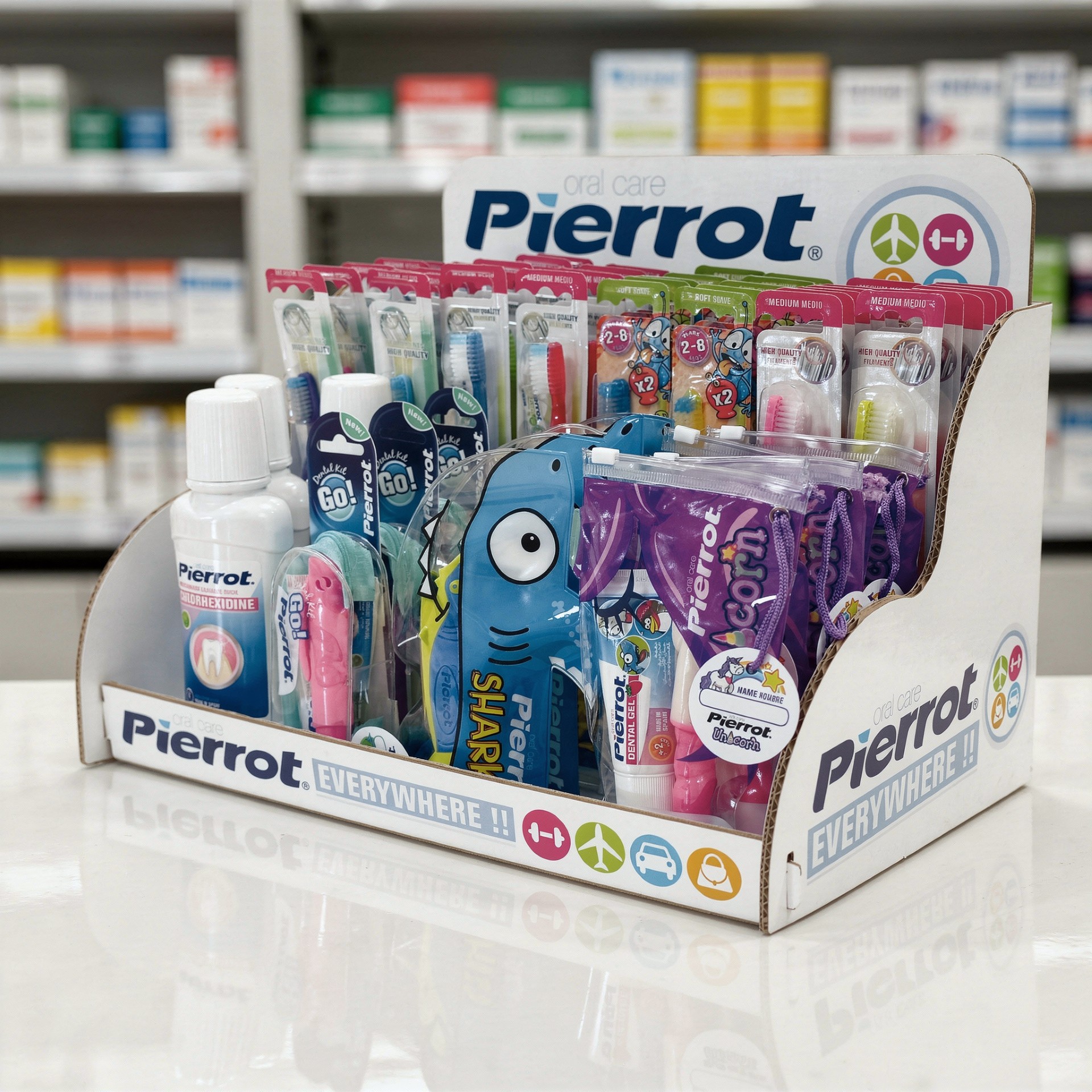
Pierrot is a Spanish oral care brand, owned by Fushima S.L. and on the market since 1945. It is sold in more than 60 countries through local distributors and is looking for distributors in new markets.
If you would like to distribute our toothpaste, toothbrushes, mouthwash and interdental products, tell us about your market and your channels through the form and our team will study your application.
Frequently asked questions
What does sole distributor mean?
A sole distributor is the only distributor a brand appoints in a territory. Unlike an exclusive distributor, it does not stop the brand from selling there directly, for example to key accounts or online.
What is the difference between an exclusive and a sole distributor?
Both are the only distributor appointed in the territory. With exclusivity, the brand also undertakes not to sell there directly; with a sole distributor, it keeps that right.
Is an authorised distributor the same as an official distributor?
In practice, yes: both describe a company approved by the brand to sell its products. Neither implies exclusivity on its own.
How long does exclusivity usually last?
It depends on each agreement. It is normally limited in time and linked to objectives that both parties review periodically.
Can an exclusive distributor sell outside its territory?
It depends on the agreement and on the competition rules of each region. It is advisable to review this point with a legal adviser.
How do I become a Pierrot distributor?
Fill in the form on our distributors page with your company, your country and the channels you sell to, and our team will study your application.
This article offers general guidance and is not legal advice.