


How to become a distributor
A practical guide to how the process actually works: what a manufacturer will ask you for, what you should ask them before you commit, and how territorial exclusivity is really granted.
Written by a manufacturer that has been appointing distributors since 1945, not by a directory.
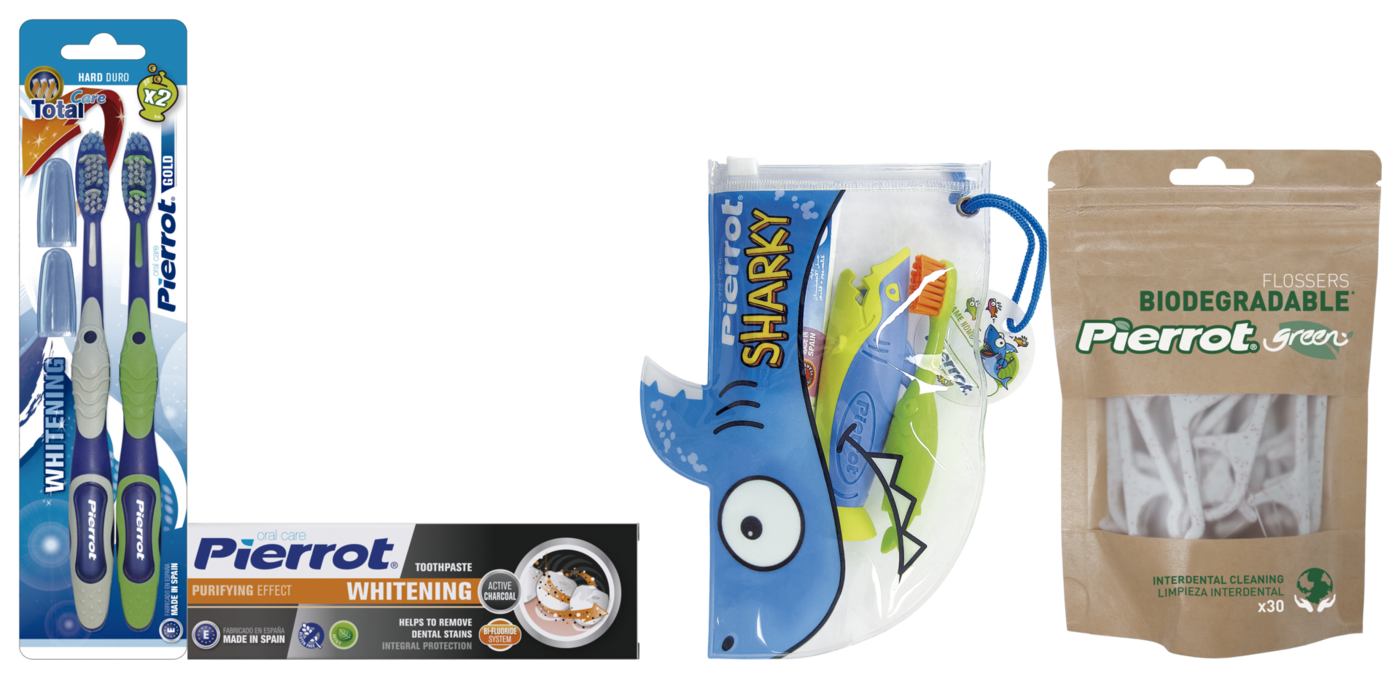
We are Pierrot, a Spanish oral care brand sold in more than sixty countries. We wrote this because every month we receive applications from people who want to distribute a brand and do not know what to prepare. Most of what follows applies to any consumer goods category, not only ours.
Eighty years appointing distributors
Pierrot was born in 1945 and is still owned by the same company, Fushima S.L. The way a distribution is granted has not changed as much as people think.
One partner per market
The network grows through local distributors who represent the brand in their own market, with their own channel and their own commercial structure.
What we actually read
This guide says what makes an application move forward and what makes it stop, because we are the ones reading them.
Distributor, wholesaler, reseller or agent
They are not the same thing, and the difference decides everything else: who owns the stock, who takes the risk and how you get paid. A lot of people write to us saying “I want to be a distributor” when what they mean is agent.
| Role | What you do | Who owns the stock | How you earn |
|---|---|---|---|
| Distributor | Buy from the manufacturer and build the brand in a defined territory: you sell on, you hold stock and you take responsibility for how the brand performs | You | Margin on resale |
| Wholesaler | Buy in volume and sell on to retailers, usually across many brands, without a commitment to build any one of them | You | Margin on volume |
| Reseller or retailer | Sell to the end customer, in store or online | You | Retail margin |
| Agent or commercial rep | Introduce the brand and bring in orders without buying the goods yourself | The manufacturer | Commission |
Say which one you mean in your first message. It saves both sides a week.
What a brand will ask you for
Six things. Prepare them before you write, and your application will already be ahead of most of what lands in the inbox.
- Which market and which channel Not just the country: pharmacy, supermarket, cash and carry, e-commerce, wholesale, hotel amenities. A brand that sells well in pharmacy may be wrong for hard discount, and the answer changes the conversation completely.
- The customers you already have Which accounts you sell to today. This is the single thing that decides most applications. A distributor who already delivers to two hundred pharmacies is a different proposition from one who plans to start.
- Warehouse and logistics Where the stock lands, whether you can hold it, what volumes you move and how you get product to the point of sale.
- Regulatory registration Oral care is a regulated category almost everywhere. Someone has to register the products with the health authority in your country. Say whether you can do it and whether you have done it before; it is often the longest part of the whole process.
- What you already distribute Adjacent categories are an advantage, not a conflict. Hygiene, personal care, pharmacy and health products all put you in front of the right buyer.
- A first order you can commit to You do not need a number in the first email, but you should have thought about it before the third one.
What you should ask the brand
Almost nobody does this, and it is the half of the conversation that protects you. Ask these before you sign anything, and ask for the answers in writing.
1. Is my territory free right now, and what counts as the territory: the country, a region, a channel?
2. Is exclusivity available, from when, and what do I have to hit to keep it?
3. Who owns the product registration if the agreement ends?
4. What is the minimum order, and does it change after the first one?
5. What happens if the brand sells into my country through a marketplace?
6. Who pays for point-of-sale material, local marketing and translated packaging?
7. What are the lead times, and which Incoterms apply?
8. Is there price protection if the list price changes mid-year?
9. What happens to my remaining stock if the agreement ends?
10. Can I speak to a distributor of yours in a comparable market?
A brand that will not answer these in writing is telling you something useful.
How territorial exclusivity really works
Exclusivity is the request we receive most often in a first email, and it is almost never granted there.
- It is earned, not opened with The usual sequence is a non-exclusive start, then exclusivity once the brand has volume and a distribution history in that market, then renewal against targets.
- It has a shape Exclusivity can be per country, per region, per channel or per product family. “Exclusive for pharmacy in Portugal” is a real and common arrangement; “exclusive for everything, forever” is not.
- It always comes with an obligation In practice it means a minimum annual purchase. If the target is not met, the exclusivity usually converts back to non-exclusive.
- Get the number before you agree Ask what the annual target is and what happens if you miss it. If nobody will put it in writing, the exclusivity is not real.
Five mistakes that get an application ignored
None of these are about being a bad distributor. They are about a first message that gives the brand nothing to work with.
- “Send me your price list” With no company, no market and no channel. There is nothing to answer: prices depend on all three.
- No market and no channel “I am interested in your products” cannot be routed to anyone. Name the country and the channel in the first line.
- Asking for exclusivity in message one Before either side knows anything about the other. It reads as inexperience, and it is the fastest way to be filed.
- A free email address and no company behind it A distribution is a commercial relationship with credit and stock in it. A company domain and a registration number change how the message is read.
- Silence on the regulatory side Not saying whether you can register the products locally. It is the part that takes longest, so a brand wants to hear about it early, not in month three.
How it works with Pierrot
Four steps, no surprises. The first one takes two minutes.
- Tell us your market and your channel Through the distributor form. The more you tell us about your channel, the more useful our first reply will be.
- We check the territory We look at whether there is active distribution in your country and which references fit your channel and your regulations. We only take applications from markets where there is no active Pierrot distributor yet.
- Terms We send you the range, the formats and the commercial terms for your market.
- First order and launch We start with the selection that works best in your channel and widen it as the brand settles in.
If you want to see what the range covers before you write, the oral care wholesale page has the full category breakdown.
Frequently asked questions
What is the difference between a distributor and a wholesaler?
A distributor takes on a brand in a territory and is responsible for how it performs there: pricing position, channel, presence at the point of sale. A wholesaler moves volume across many brands without that commitment. Both buy the stock; only one of them is building something.
Do I need a warehouse to become a distributor?
In most cases yes, either your own or contracted. A distributor holds stock, and that is precisely what separates the role from being a commercial agent. If you cannot hold stock, say so early: agent arrangements exist and it is better to be in the right conversation from the start.
How much money do I need to start?
It depends on two numbers that only the brand can give you: the minimum first order and the cost of registering the products in your country. Ask for both in writing before you budget. Anyone who quotes you a general figure for “becoming a distributor” without knowing your market is guessing.
Can I get exclusivity for my country?
Sometimes, but almost never in the first agreement. Exclusivity normally arrives once there is volume and a track record, and it comes attached to an annual purchase target. Ask what that target is before you agree to anything.
Who registers the products with the health authority?
It varies by market and by brand. In most cases the distributor handles the local registration and the manufacturer supplies the technical documentation, formulations and certificates needed for the file. It is worth settling in writing who owns that registration if the agreement ends.
How long does it take from first contact to first order?
The commercial part is fast, usually a few weeks. The regulatory part decides the calendar: where the products are already registered you can move almost immediately, and where they are not, the registration file is normally the longest step. Ask about it in your first exchange.
Do I have to distribute the whole range?
No. Most partners start with a selection adapted to their channel and widen it as the brand settles in. Toothbrushes, toothpastes, mouthwashes, floss, interdental and children’s lines are all available, and you can see the categories on the oral care products page.
How do I apply to distribute Pierrot?
Through the form on the distributors page. Tell us the country, the channel you sell through and what you distribute today. We check whether the territory is open and reply with the catalogue and the terms for your market.
Once the conversation reaches the paperwork, our guide to the distribution agreement goes through it clause by clause: territory, exclusivity, minimum purchase and how it ends.
If you are sourcing a single category rather than the whole brand, see toothpaste wholesale.
Ready to apply?
Tell us which market you work in and through which channel. We check the territory and send you the full catalogue and the terms.